
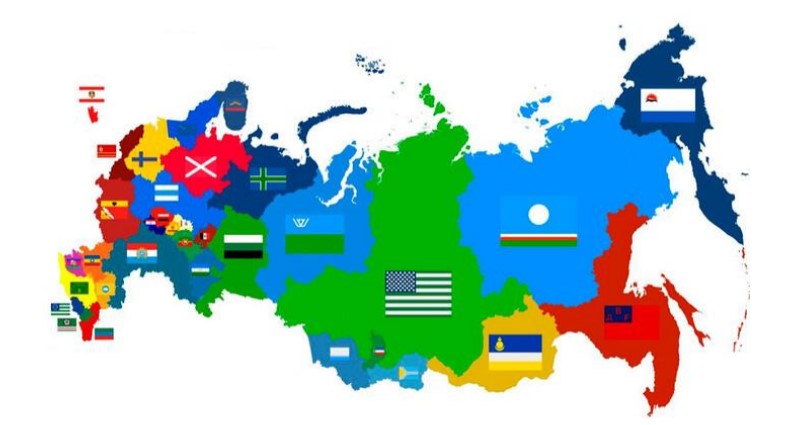
The non-governmental analytical center “Ukrainian Studies of Strategic Disquisitions” continues its long-term project of Monitoring Regional Processes in the Russian Federation.
The purpose of the study is to record and determine the dynamics of conflict-generating and disintegration factors that will contribute to the deconstruction of the Russian Federation and its disappearance as a geopolitical reality.
The object of monitoring is the information space of the Russian Federation. The most popular news items of the quarter from various regions of Russia are analyzed, which will provide a more or less clear understanding of the internal processes taking place on the territory of the aggressor state and will allow monitoring of conflict-generating regional processes.
Monitoring of Regional Processes in the Russian Federation: Spring 2026
During the spring period, various regions of Russia began to sharply feel how the war they brought to Ukrainian land is returning to their own homes like a boomerang. At the same time, old problems have not disappeared anywhere—outdated and poor-quality infrastructure, a weak social sector, and a corrupt and inherently imperial system of government.
Download:
Download here: https://ussd.org.ua/wp-content/uploads/2026/06/monitoring-of-regional-processes-in-the-russian-federation_spring-2026-1.pdf
CENTRAL-WESTERN REGION
Moscow Region
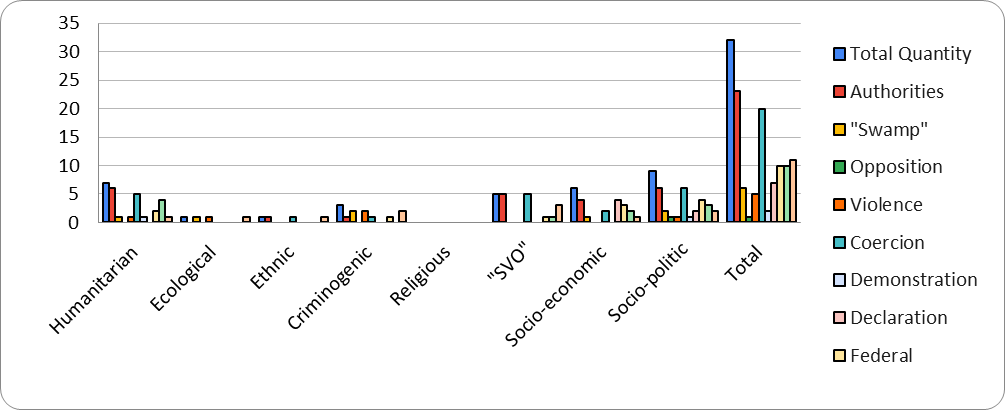
In the spring of 2026, destructive processes intensified in the central regions of the Russian Federation, caused by a combination of the consequences of the war, economic problems, and increased state control. The greatest public resonance was caused by massive attacks on Moscow and critical infrastructure, which undermined the sense of security even among the loyal part of the population. At the same time, the authorities significantly expanded the practice of internet blocking and digital control, which caused public dissatisfaction and became the subject of criticism even from the systemic opposition.
The socio-economic situation continues to deteriorate. Strikes on oil refining infrastructure caused problems in the fuel sector, while internet restrictions are inflicting additional damage on the economy. At the same time, the burden on regional budgets is increasing, and fulfilling social obligations is becoming more difficult.
In the criminal sphere, increased control over the circulation of weapons and a growing number of security inspections have been recorded. At the same time, problems related to mobilization measures and the provision of benefits to war participants are becoming increasingly visible.
Overall, the spring period demonstrated further growth in public dissatisfaction, a gradual erosion of trust in the federal authorities, and increased dependence of the regime on repressive mechanisms of governance.
Bryansk Region
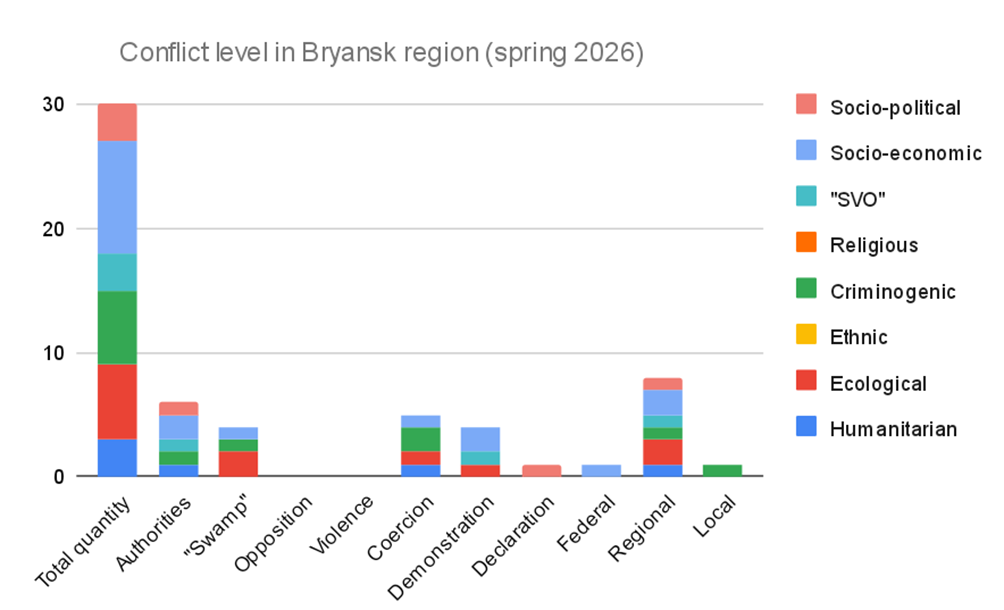
During the spring of 2026, socio-economic and security problems characteristic of the Russian Federation’s border regions intensified in Bryansk Oblast. The authorities continued the course toward militarization of society, providing priority educational benefits to the children of participants in the war against Ukraine, particularly during admission to cadet educational institutions. At the same time, the consequences of proximity to the combat zone are becoming increasingly noticeable: due to regular drone attacks, the holding of mass events for May 9 came into question, and the issue of public safety is becoming increasingly relevant.
The situation in the utilities and infrastructure sectors remains difficult. Spring floods led to the inundation of roads and dozens of household plots, and transportation problems arose in a number of settlements. At the same time, scheduled power outages were introduced in the region, while supervisory bodies launched inspections over suspicions of inflated utility tariffs.
The socio-economic situation is characterized by continued growth in the prices of fuel, construction materials, equipment, and food. Against this background, the debt burden on the population is increasing: a significant number of enforcement proceedings related to alimony and other debts have been recorded. The authorities declare support for the birth rate through payments for a third child, but access to these programs is significantly limited by numerous conditions.
In public life, there is a trend toward expanding administrative control. The number of fines for everyday violations is growing, requirements for keeping pets are being tightened, and control over drivers is increasing. Additional challenges include a worsening environmental situation, a high number of animal bites, risks of rabies spread, and difficult conditions for people with seasonal allergies. Overall, the region demonstrates a combination of economic difficulties, infrastructure problems, and a gradual increase in administrative pressure on the population.
Kursk Region
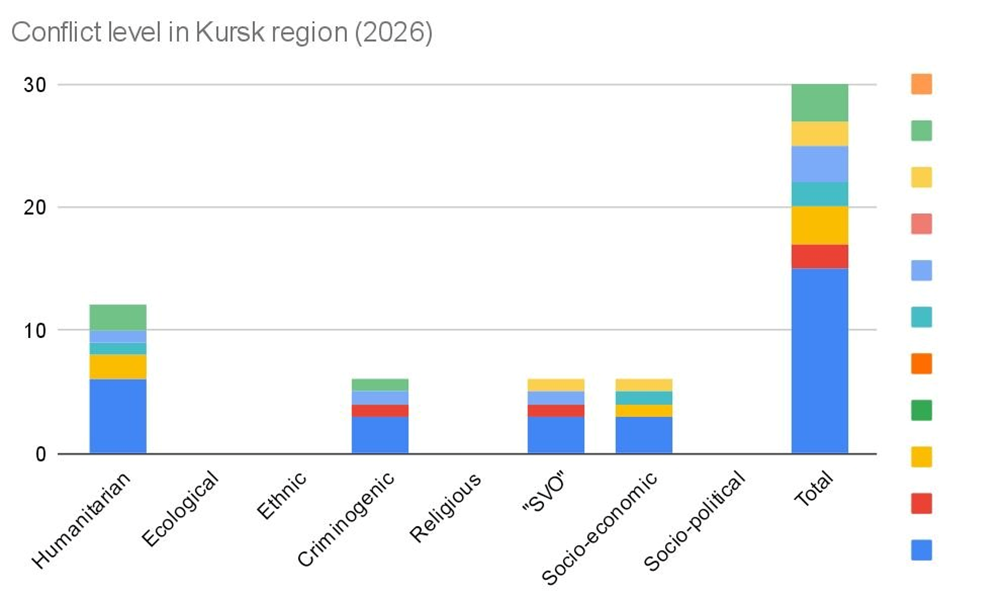
During the spring of 2026, Kursk Oblast continued to demonstrate signs of the systemic degradation of a border region under the constant influence of war and chronic underfunding of the civilian sector. One of the most illustrative manifestations was the deterioration of basic infrastructure: in Kursky District, a 50-year-old water tower collapsed due to physical wear and tear, leaving the population without stable water supply and once again demonstrating the critical condition of utility networks.
The war factor is increasingly affecting the education system. Due to the unstable security situation, the federal authorities were forced to significantly simplify graduation certification procedures for schoolchildren in border territories. Kursk Oblast received the largest scale of such relaxations among border regions, which effectively became an indirect acknowledgment of the impossibility of ensuring the normal functioning of the education system under conditions of constant risk.
At the same time, contradictory economic processes are being observed in the region. Despite its proximity to the combat zone and population migration losses, Kursk became the leader in Russia in terms of growth in the cost of secondary housing. This situation is explained by a reduction in market supply, concentration of demand on relatively safe real-estate properties, and the influence of budget payments related to the war.
Corruption within administrative structures remains an additional indicator of internal problems. The arrest of a former high-ranking transport official in Kursk Oblast on suspicion of receiving a large bribe confirmed the persistence of systemic corruption practices among regional elites even during wartime.
Overall, the situation in Kursk Oblast is characterized by a combination of infrastructure deterioration, the growing impact of war on everyday life, and the accumulation of governance problems that increasingly limit the region’s ability to achieve stable development.
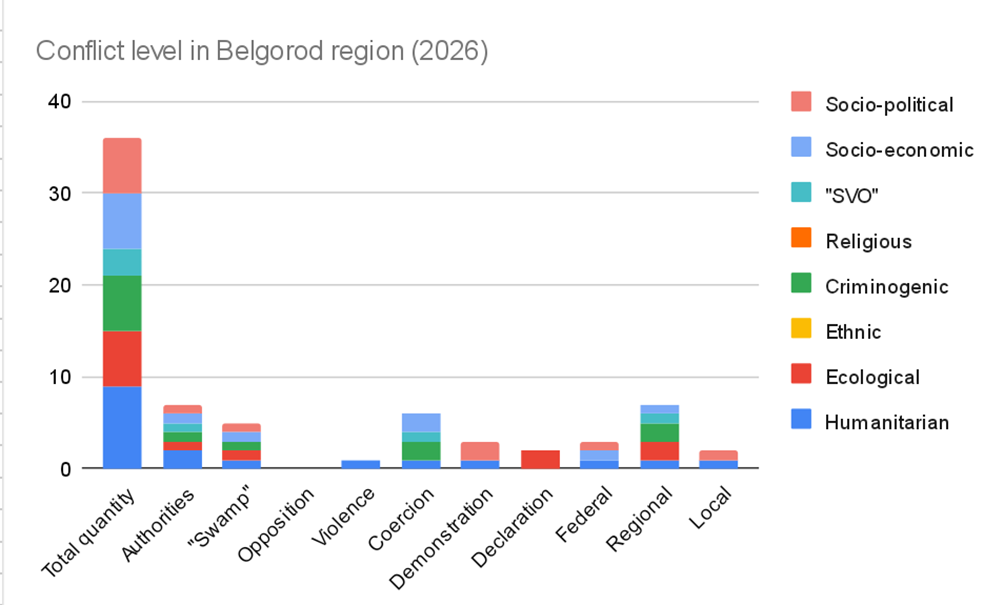
Belgorod Region
During the spring of 2026, Belgorod Oblast continued to be significantly affected by its border status and the consequences of the war. Security measures, including restrictions on mobile internet operations to counter drones, began creating problems for civilians, including disruptions to certain medical services. At the same time, local authorities are intensifying preparations for possible emergencies and interruptions in energy supply.
The criminal situation remains difficult. The region demonstrates high rates of crimes involving explosives and illegal arms trafficking, as well as a noticeable increase in juvenile delinquency. The accumulation of security risks is accompanied by regular vehicle inspections and increased control over the population.
In the utilities sector, signs of systemic problems persist. The unsatisfactory condition of urban infrastructure, difficulties with maintenance and improvement projects, and regular flooding of certain facilities indicate the limited capabilities of local governance. Against this background, personnel reshuffles are taking place in government bodies and state enterprises, while the resignations of leaders in Belgorod and Bryansk oblasts can be viewed as attempts by the federal center to stabilize the situation in problematic border regions.
The socio-economic situation is characterized by continued growth in prices and tariffs, worsening accessibility of utility services, and the dependence of certain infrastructure projects on credit financing. At the same time, part of budget expenditures is directed toward secondary projects, which draws criticism amid inflation and declining purchasing power.
Additional factors of tension include environmental and medical challenges: seasonal allergies, cases of tick-borne diseases, radiation monitoring, and strengthened fire-prevention measures. At the same time, the practice of administrative restrictions and fines is expanding, increasingly regulating the everyday lives of citizens. Taken together, these processes create an atmosphere of social fatigue and apathy, manifested in declining civic activity and a reluctance among the population to participate in public initiatives.
CAUCASUS
Dagestan
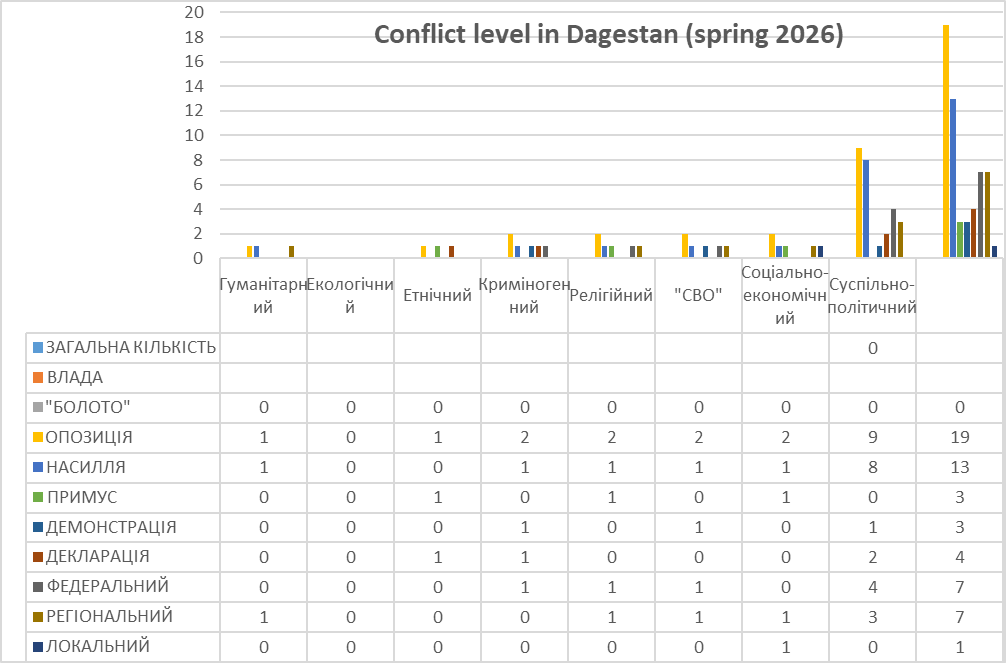
The biggest problem in the region during the spring of 2026 was the catastrophic flooding that shook the region. The consequences of these natural disasters even led to the resignation of the head of the republic, although only after a lengthy pause so that the failure would not appear so obvious. The Kremlin continues to consider it appropriate to keep the republic in the hands of “parachutists,” that is, officials appointed from other regions of the Russian Federation. A logical continuation of Moscow’s personnel policy is also the increase in the number of specialists connected to the security services within regional state institutions.
Conflicts between the central government and regional elites, as well as between the authorities and the so-called “veterans of the special military operation,” are growing in the region. Factors contributing to the rise of extremism and, in general, increasing public tension are also evident. The authorities ignore the urgent problems of ordinary people while strengthening repression instead. All these factors lead to increased radicalization and tension within society.
Northwestern Caucasus
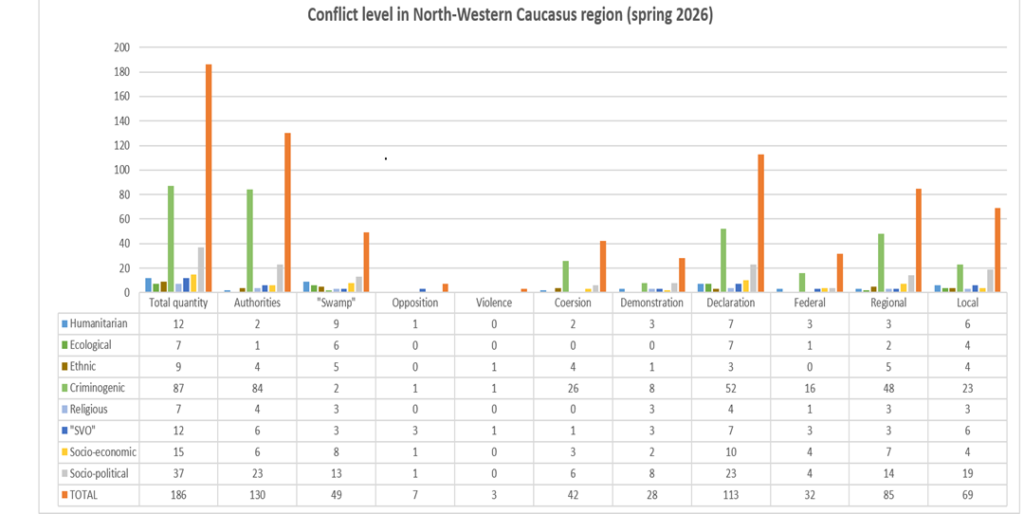
In the spring of 2026, the number of conflicts increased in the reporting region. In effect, a transition from latent instability to multiple forms of conflict is being recorded. The region’s problems are becoming increasingly systemic, while resistance is moving from isolated outbreaks of disobedience to network-based activity with active use of social media.
In addition to the traditional problems of the region and Russia as a whole—such as corruption, deteriorating infrastructure, and the authorities’ desire to conceal all problems, often through outright terror against opponents—this year brought additional environmental problems along the Black Sea coast.
Ukrainian drone strikes against energy and other infrastructure have become a systemic feature of the region. Problems related to migrants and religious contradictions, long characteristic of this region occupied by Russia, also remain. These issues have only intensified while the authorities, instead of solving them, merely suppressed the “symptoms” of the problems, effectively making them worse.
But the worst factor contributing to the disintegration of society has been the Kremlin’s failures on the fronts of the aggressive war against Ukraine. If the so-called “Great Patriotic War” previously served as a unifying factor, then the so-called “special military operation” has now become the factor that is finally breaking apart the already fragile and hastily constructed superficial framework of regional society.
CENTRAL-EASTERN REGION
Orenburg Oblast
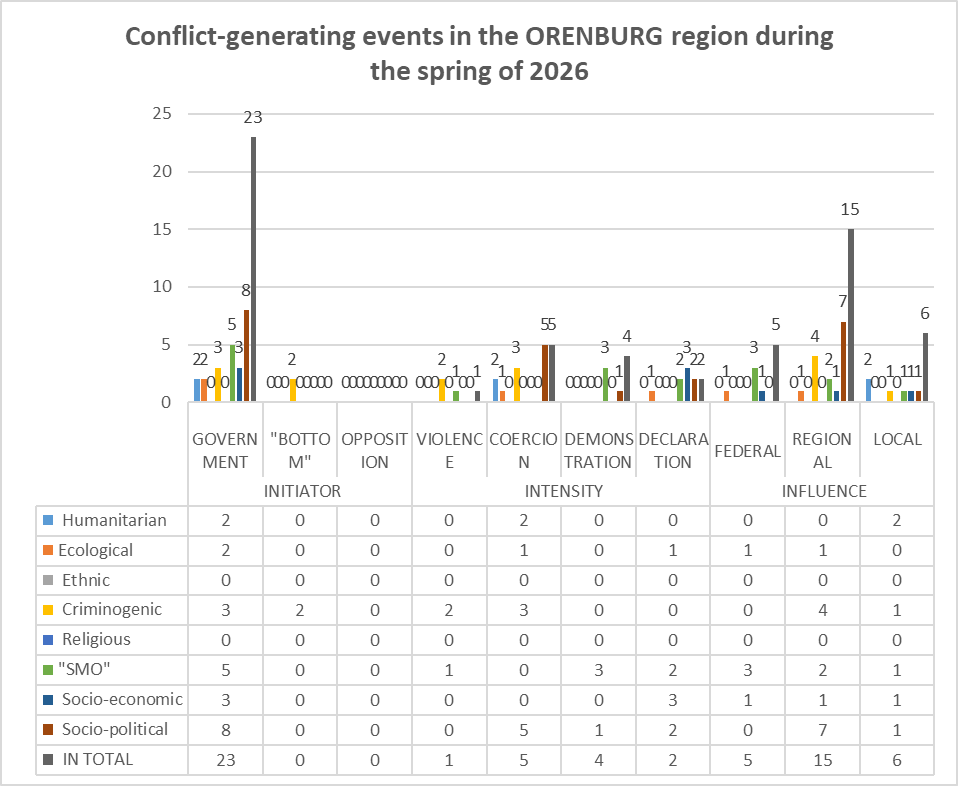
This spring, the situation in the oblast was characterized by a slight deterioration. This was primarily connected to the potential threat of the spread of large-scale Ukrainian UAV attacks into the region (attacks during this period were limited but noticeable). The primary target was the Orsk Oil Refinery. Given the current situation in the air domain, the oblast may be considered one of the locations for relocating certain industries, although it is still not completely invulnerable to Ukrainian drones and missiles. The excessive concentration of air-defense systems around the capital region may negatively affect provinces such as this one. Here, Russia’s vast territory may work against Russia. One of the immediate effects was the unpleasant reduction in the scale of Victory Day events (passes required for the parade in Orenburg, and the “Immortal Regiment” march moved to an online format).
The humanitarian and environmental spheres were marked by scandals involving the detention of the former regional minister responsible for protected natural territories on bribery charges, as well as a court order compelling the Orenburg city administration to deal with stray dogs, and the need to allocate additional federal funds for road repairs after flooding.
The Russian authorities in Orenburg Oblast continue their policy of supporting the war against Ukraine. In particular, this concerns the implementation of patronage over occupied territories, namely the Perevalsk District of Luhansk Oblast (under the old administrative division). As part of this patronage, aid is periodically sent from Orenburg Oblast to occupied Luhansk territory: humanitarian assistance and support for occupying military personnel. At the same time, representatives of the Russian authorities bring and appoint their own people to our land and spend funds “for reconstruction” of these territories (where there have been no hostilities except occasional strikes since 2014). For the same purpose, the “Orenburg–Sevastopol” passenger train route was launched. The result is the constant detention of individuals “for subversive activities” (including sabotage of communications facilities, financing prohibited organizations—mostly those connected with Ukraine—and posting criticism of the authorities on social media). Due to the worsening overall economic situation, the central government is promoting the write-off of a significant portion of federal debts for the oblast, as for most regions.
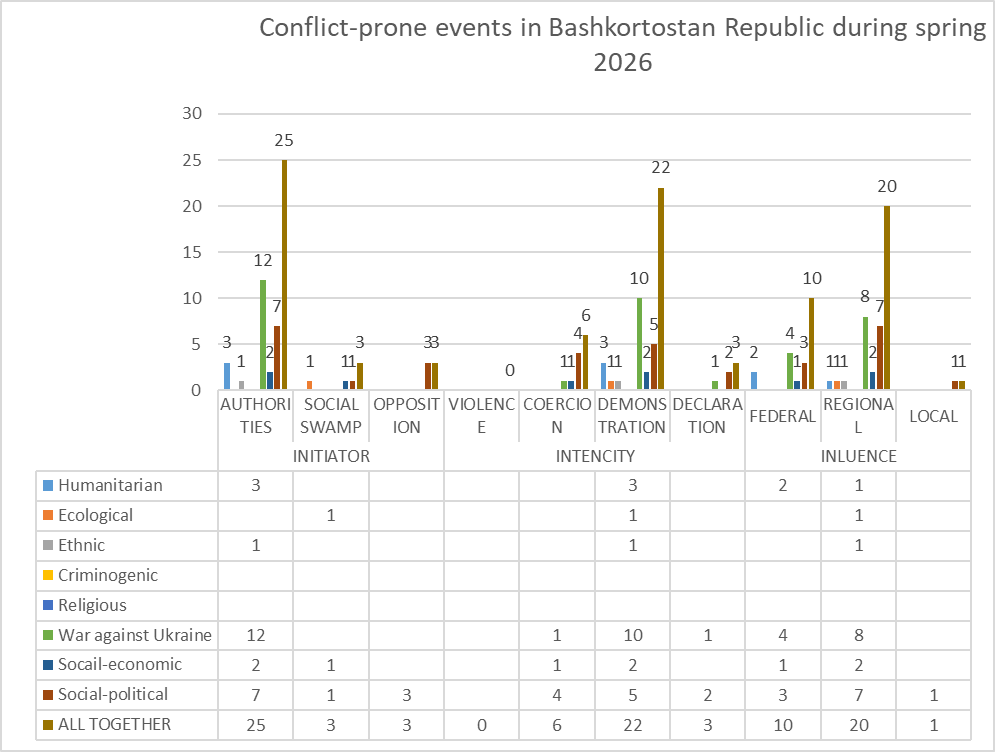
Bashkortostan
Bashkortostan remains among the regions of the russian federation whose residents suffer the most from the war against Ukraine thanks to the кussian authorities. The last and their henchmen in Bashkortostan are increasing the militarization of Bashkortostan. The republic remains the first in terms of losses in the war against Ukraine. First Deputy Prime Minister of the rf Manturov, together with Khabirov, visited the production of UAVs in Bashkortostan, for example, at 2 enterprises in Ufa on 07th of March 2026, and they also took part in sending cargo to the war against Ukraine. Khabirov stated that Bashkortostan is among the top three regions of the Rf in terms of the “level of droneification”. After that frequent arrivals to Bashkortostan with the closure of airports are not surprise, in particular to the oil refineries in Ufa and the petrochemical plant in Sterlitamak. A large Nurlino oil distribution station in Bashkortostan also exploded, there are dead and wounded. Khabirov, however, spoke about the UAV attacks as a “routine pattern.” Instead, he and his henchmen accept all new privileges for the war correspondents, propose to write off debts at the rf level to all participants in the war against Ukraine, and approve the medal “From the Grateful People of Bashkortostan” for their contribution to the war against Ukrainians (the first time they awarded themselves by this award, the Prime Minister of Bashkortostan Nazarov was awarded). Khabirov is putting pressure on Bashkortostan with militarization in education. Khabirov announced the mass recruitment of veterans of the war against Ukraine into it at the school education forum on 14th of April 2026. Forced recruitment for work in the russian Armed Forces was revealed in schools from 77 regions of the Rf, most of them in Bashkortostan. Russian court refused to pardon the Ukrainian victim of the Russian war, Dmitry Gnatenko, who is prisoned for 12 years in Bashkortostan for alleged cooperation with the SBU.
There is less money left to wage the war against Ukraine, that is extremely noticeable in Bashkortostan. The authorities of Bashkortostan reduced the amount of assistance to the families of the soldiers of the Armed Forces of the rf from 500 to 100 rubles on 8th of May 2026. Although Nazarov claimed an alleged increase in funding for the families of soldiers of the Armed Forces of the rf against Ukraine. The Ufa City Hall borrowed 1.1 billion rubles in debt from a private bank, Sberbank through the court collected from it a debt for construction of a school of 550 million rubles, but the city hall planned to pay for the recruitment of contract workers for the war against Ukraine. Khabirov probably extended the payment for the first contract in the Armed Forces of the Rf in 1 million rubles until 01th of June 2026 on the same basis. Bashkortostan is in 6th place among the regions of the Rf according to the debt of the population.
Bashkirs and other enslaved people of the Rf are protesting against their destruction. residents of the villages of Starobedeevo and Starobiryuchevo in Bashkortostan recorded an appeal calling for a road to be built between them on 17th of April 2026. They also emphasized that 3% of their residents died in the war against Ukraine. In Starobedevo, the absolute majority of the population is Mari, in Starobiryuchevo, Bashkirs., Lyudmila Zanina, the psychologist from Ufa published a video address to putin to accuse him of the losses and the demographic crisis of the Bashkirs, the bombardments of Bashkortostan due to the war came there, the deaths of Ukrainians, and called for him to resign. Zanina reported threats from russian authorities after the video publication. 11 convicted for participating in the protests in Baymak have achieved the reduction in sentences during April-May 2026.
The Russian authorities are responding with repressions from 2 directions. The first is the purge of all dissatisfied, even potentially. A resident of the village of Kuyanovo was sent to prison for allegedly justifying a “Ukrainian terrorist formation”, calls for the killing of Russian soldiers and missile strikes on Belgorod, Rostov-on-Don, moscow and St. Petersburg. Abroad, the Russian authorities unsuccessfully attempted to assassinate Bashkir oppositionist Ruslan Gabbasov. The Russian authorities pushed through a falsification of the renaming of one of the streets of Ufa in honor of the Bashkir hater Zhirinovsky; the Bashkirs stopped the first attempt in December 2025. The Bashkortostan authorities planned to forcibly transfer everyone to the Max messenger by the end of 2026. The second direction is to intimidate government officials with selective punishments in order to keep others on the hook for loyalty. Ufa Mayor Ratmir Mavliev was arrested for charges of illegal land grabbing on 29th of April 2026. Sergey Kozhevnikov was appointed as acting mayor. Mavliev is linked to Khabirov and the Tatarstan leaders. This is the 4th person close to Khabirov from the top of Bashkortostan who has been pressured in a year. 2 deputies of the Ufa city council from “A Just russia” were also arrested for corruption. However even the authorities of Bashkortostan dependent on the Rf, are dissatisfied with the level of national dishonor from the Rf to the Bashkirs: Deputy Prime Minister of Bashkortostan Kilsenbayev criticized his subordinates for the lack of announcements in the Bashkir language at the Ufa train station.
Republic of Udmurtia
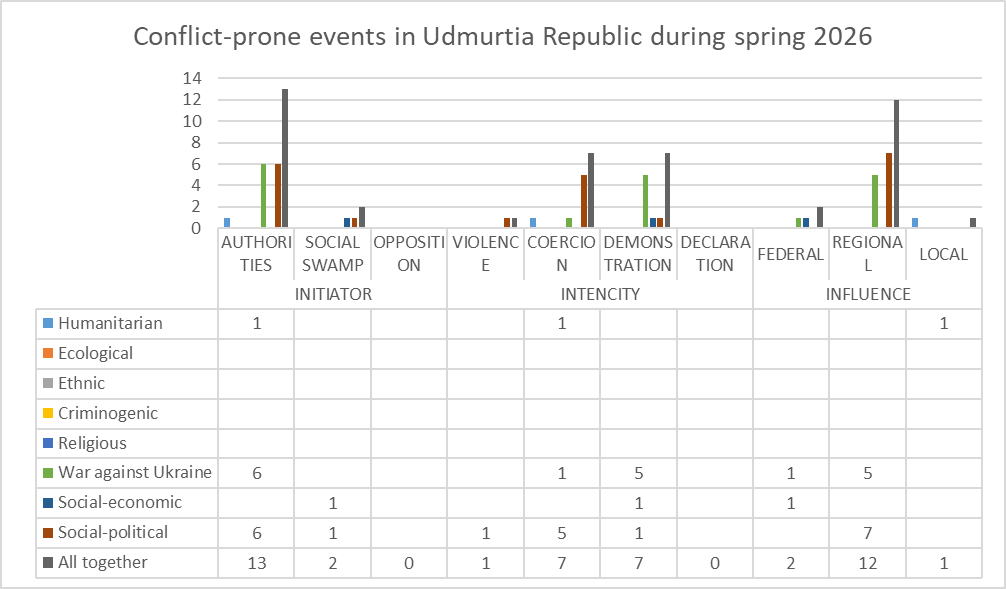
The Republic of Udmurtia is feeling the pressure of the war against Ukraine on itself. The budget deficit of Udmurtia is 9.7 billion rubles. It caused also by the costs of officially establishing the administration of the occupied Lutugino district of the Luhansk region of Ukraine in the amount of 120.9 million. The patronage includes the costs of the alleged restoration (although there have been no active hostilities in the district since the occupation in 2014, except for spot bombardments) and the importation of the population from Udmurtia to Lutugino district. There were repeated announcements of alarms and arrivals in Udmurtia during spring 2026, for example in Glazov, the authorities reacted weakly to them. But they actively lured and dragged russians into war. Criminal cases for murder were closed against 2 residents of Izhevsk who went to war against Ukraine (1 has already been destroyed by the Armed Forces of Ukraine). Russian authorities tried to force a patient from a psychiatric hospital in Udmurtia to join the armed forces (a logical place for recruiting them).
Whoever does not remain silent against the dominance of the russian government, it sends to repression. There were repressions against 2 citizens for comments on the social networks against the war with Ukraine, one for a comment against russian civil servants, 1 resident on charges of attempting to strangle the military commissar of the Yukamensky and Krasnogorsk districts of the Republic during spring 2026 in Udmurtia. Ivan Eliseev (in exile), the founder of the movement “Udmurtia against corruption” was declared wanted. There was also a continuation of the pressure against Andrey Yedigaryov, a deputy of the Glazov city council from the Just Russia party. Yedigaryov collaborated with Ilya Ponomarev, criticized rutin and the rf, for which he was imprisoned and accused of a terrorism and an attempt to seize power.
The economic situation of Udmurtia is sad: it is in 4th place according to the debt of citizens over the past 3 years. The head of the Republic, Brechalov, is actually announcing his intention to turn its capital, Izhevsk, into a mini moscow at the same time.
Tatarstan
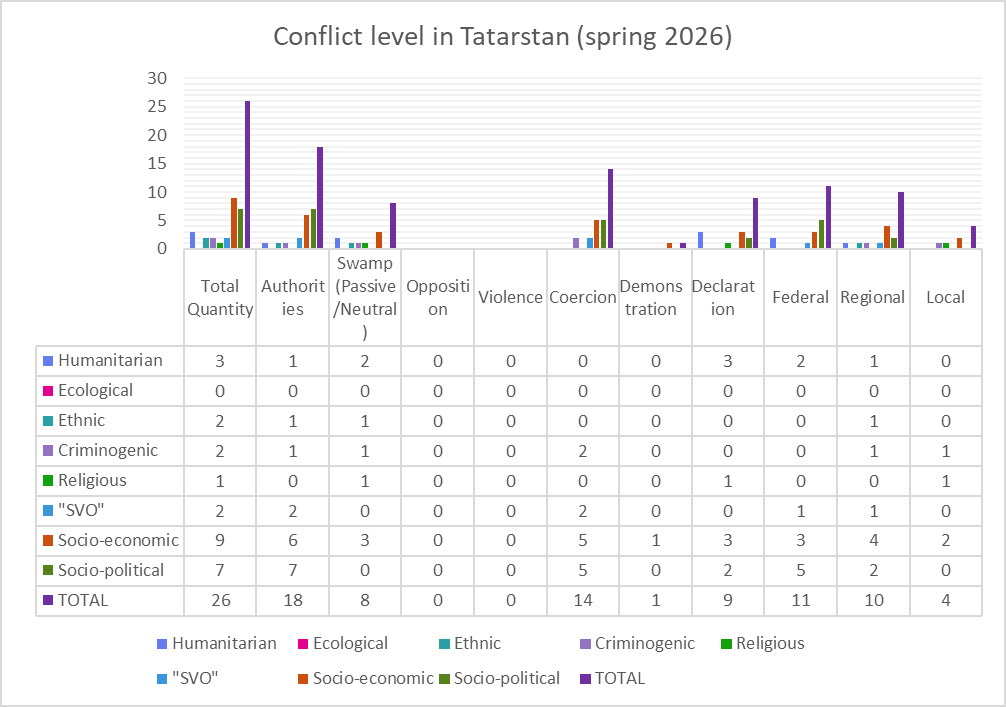
During the spring of 2026, the Republic of Tatarstan experienced a simultaneous strengthening of digital control, economic problems, and the militarization of society. One of the key trends was the deployment of elements of the so-called “sovereign internet”: widespread disruptions to mobile communications, expansion of state personal-data databases, restrictions on access to international traffic, and the gradual replacement of independent communication channels with state-controlled platforms. At the same time, control over youth is being strengthened through the creation of various digital and ideological structures based in educational institutions.
Against this background, signs of the region’s economic exhaustion are becoming increasingly visible. Despite its status as one of the Russian Federation’s leading industrial centers, Tatarstan is facing declining production, worsening labor-market conditions, and growing financial difficulties among the population. Problems affecting major enterprises, an increase in personal bankruptcies, inflation, and rising fuel prices are creating a negative social climate. At the same time, signs of degradation are being recorded in certain elements of civilian infrastructure, particularly in the utilities and healthcare sectors.
The war is having an increasingly strong impact on the republic’s internal life. Industrial, financial, and human resources are being redirected toward military needs, while the civilian sector is gradually losing priority. Even the educational sphere is increasingly involved in carrying out tasks related to supporting military structures.
Overall, the spring of 2026 demonstrated a further increase in the region’s dependence on federal policy, the growing role of repressive and control mechanisms, and the deepening of socio-economic problems. Taken together, these factors contribute to the accumulation of latent public dissatisfaction which, while not yet taking open forms, is gradually undermining trust in state institutions and official information narratives.
Chelyabinsk Region
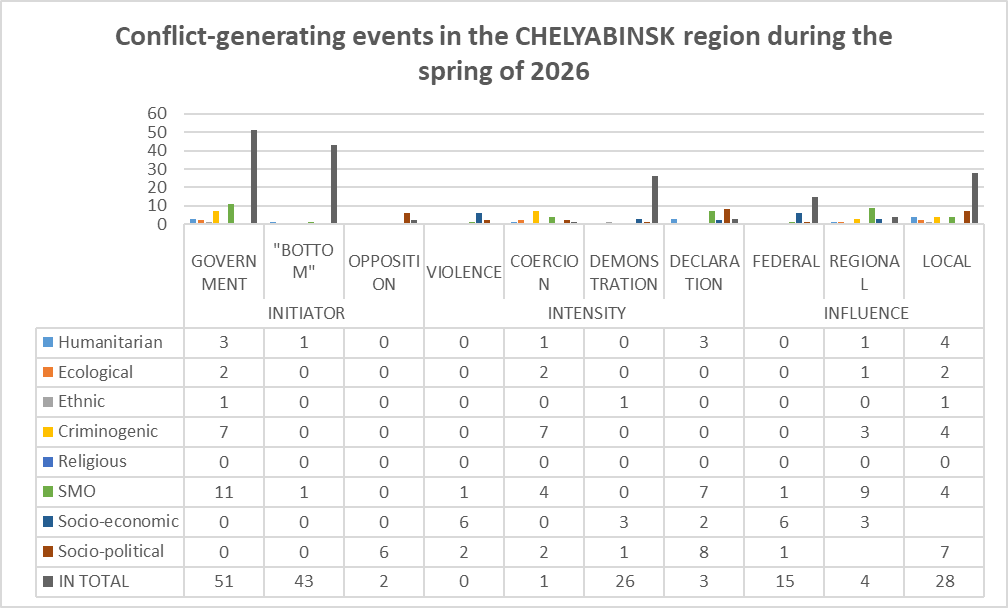
This spring, the oblast was marked by a new series of developments involving senior officials (mostly concerning corruption schemes with various businesses). Among them were a former deputy mayor of Chelyabinsk, the head of the regional branch of Rospotrebnadzor, and the deputy head of a Chelyabinsk bailiffs’ department. Serious abuses were also recorded in the organization of garbage removal and the repair of water-treatment facilities.
In the oblast (as in the Ural region in general), there was an increase in air-raid alerts. The Chelyabinsk Metallurgical Plant, the Shagol airfield, and a military aviation school were targeted by UAV attacks. Naturally, this was described as a “rehearsal” for larger-scale raids. Authorities and businesses are being forced to adapt to the “normality” of such dangers: existing shelters and warning systems are being improved, new ones are being built, and insurance policies now include compensation for damage resulting from aerial strikes. At the same time, related mass internet shutdowns can lead to network disruptions and delayed air-raid warnings. Additional inconvenience is caused by disruptions to online services, particularly payment systems. Victory Day events also had to be scaled back.
The regional authorities actively support the aggression against Ukraine, placing military personnel at the center of public life. The oblast continues to rank among the leaders in war casualties, confirming strong demand for military service. The payment for signing a military contract remains unchanged at 3.1 million rubles. The Legislative Assembly approved mandatory employment quotas for veterans at large enterprises; garden plots are being used to accelerate land allocations to military personnel; and preparations are underway for the first graduating class of administrators with veteran backgrounds under the “Heroes of the Southern Urals” program. At the same time, a program aimed at encouraging higher birth rates is being developed. The region maintains patronage over a number of communities in occupied Donetsk Oblast. All of this requires substantial funding, and as a result the oblast currently ranks first among Ural regions in state debt and second-to-last in median wages. However, Governor Texler presented a federal program for writing off debts of administrative regions, under which most of the federal debt is expected to be forgiven. Ultimately, Moscow remains highly interested in the oblast as one of the country’s largest industrial centers.
The region’s state security bodies detained a number of individuals accused of railway sabotage, participation in “terrorist organizations,” and internet extremism. Separately, the authorities warned local residents against public protests over the state blocking of Telegram.
FAR EAST
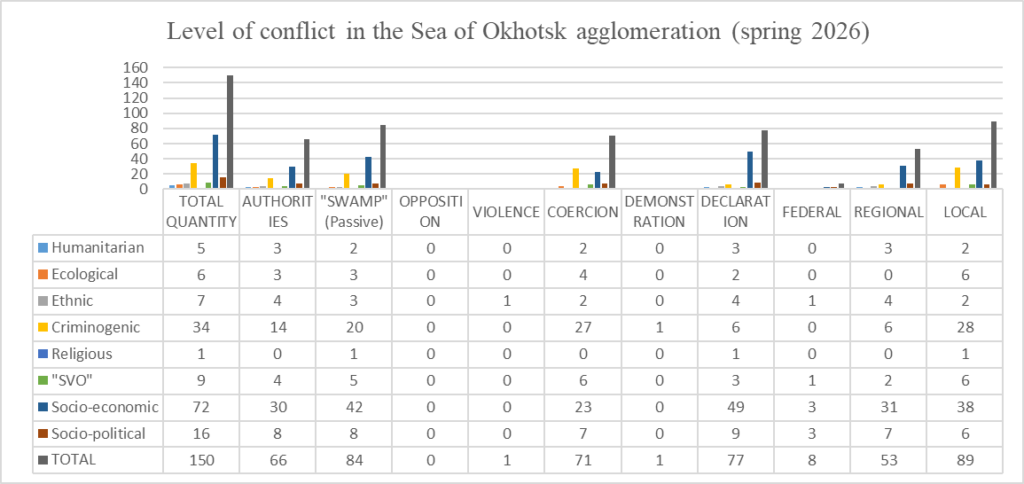
The overall level of conflict potential in Sakhalin Oblast and Kamchatka Krai showed a gradual upward trend during the reporting period. At the same time, most recorded conflicts remain at a declarative level and are expressed mainly through social media, comments on publications, local information campaigns, and individual appeals to government authorities.
The most problematic sphere remains the socio-economic sector. Economic difficulties form the basis for most other conflicts. Rising prices for essential goods, high housing costs, increasing tariffs, growing debts among enterprises and municipalities, and problems with wage payments are all negatively affecting public sentiment. Particularly illustrative are the numerous reactions of the population to official statistics and rankings, which differ significantly from local residents’ subjective perception of their quality of life.
The second most significant factor is the humanitarian sphere. The deterioration of social infrastructure, problems in educational institutions, and the closure or threatened closure of certain facilities create a sense of degradation in public services. A significant portion of criticism is directed not only at local officials but also at regional authorities in general.
Ethnic issues continue to be a source of tension. The main irritants are migration, intercultural interaction, and resource distribution. In most cases, conflicts do not escalate into an open phase, but the information environment indicates a gradual accumulation of mutual distrust among certain population groups.
A distinctive feature of the reporting period was increased criticism of state information campaigns and attempts to administratively transfer the population to alternative digital platforms. Citizens’ reactions indicate a low level of trust in such initiatives and a desire to retain familiar channels of communication.
In the political sphere, a further decline in the authority of regional administrative structures is being observed. The defining characteristic is not so much support for opposition forces as the spread of skepticism regarding the effectiveness of public officials. Criticism is increasingly taking on an ironic or sarcastic tone, indicating a loss of faith among the population in the possibility of quickly resolving accumulated problems.
Overall, the spring period was characterized by growing public irritation against the backdrop of worsening socio-economic indicators and declining trust in official institutions. At the same time, there are no signs of the emergence of a mass protest movement or of structures capable of converting public dissatisfaction into organized political activity. The dominant public response remains passive dissatisfaction, expressed primarily within the information space.
CONCLUSIONS
The situation in the Russian Federation and its individual regions during the spring of 2026 is beginning to take on a character that is threatening for the Kremlin. An increasing number of Russian regions are receiving visits from the “good unknown drones.” The frequency of strikes in some regions is causing local residents to miss life “before the Special Military Operation.” This dividing line between advocates of a “victorious war” and ordinary people who want a return to “peaceful life” is becoming increasingly pronounced.
At the same time, longstanding infrastructure problems, environmental neglect, and the general economic decline in the regions have not disappeared. This year, all of these issues are being intensified by new factors in both the economic and security spheres.
Against the backdrop of diminishing opportunities for enrichment under conditions of a real economic recession, there is also an increase in conflict potential between regional elites and Kremlin elites, as well as between both of them and new contenders for access to the “state feeding trough” from among the so-called “SMO veterans.”
Authors:
• Yuriy Syrotyuk
• Yuriy Oliynyk
• Ivan Yanyuk
• Mykola Volhov
• Armais Ohanyan
• Andriy Kovalyov
• Andriy Mykhailychenko
• Oleksiy Tkachenko
• Ivan Hatsenko
• Iryna Yevdochenko
Leave a Reply